01
See clearly
When you see only the downside or only the upside, your read on the situation warps and your composure goes with it. Get the view balanced and it comes back, and so does the room.
That one question has shaped pretty much everything: nearly two decades of study, six books, and every room Sam has ever stood in front of. Here's where it lands.
To teach people to see clearly in conflict, and turn that sight into their advantage.
Most people think their ceiling is set by the room they're in: the opponent across the table, the difficult colleague, the market, the pressure. It isn't. It's set by how clearly they can see when things get hard. Composure isn't about biting your tongue. It's about getting an accurate read on what's really going on, even when everything in you wants to react. And the real trick is making that repeatable, so it holds up in the next tough conversation, and the one after that.
A world where people see their own depth, and live from it.
Underneath almost every conflict is a person who suspects they're more than they let on, and quietly worries they might be less. The work is to close that gap. To help people look inward without flinching, find something solid there, and lead from it instead of around it. The sight you turn inward is the same sight that reaches outward. It's not two separate things. It's one move, going in two directions.
Looking inward feels small and private. Making an impact feels big and outward. We tend to treat them like opposites, as if time spent looking in is time you're not spending reaching out.
But they're the same line. How far you can see out depends on how deep you've been willing to go in. The way out is through the way in. You have to go down before you can reach further than where you started.
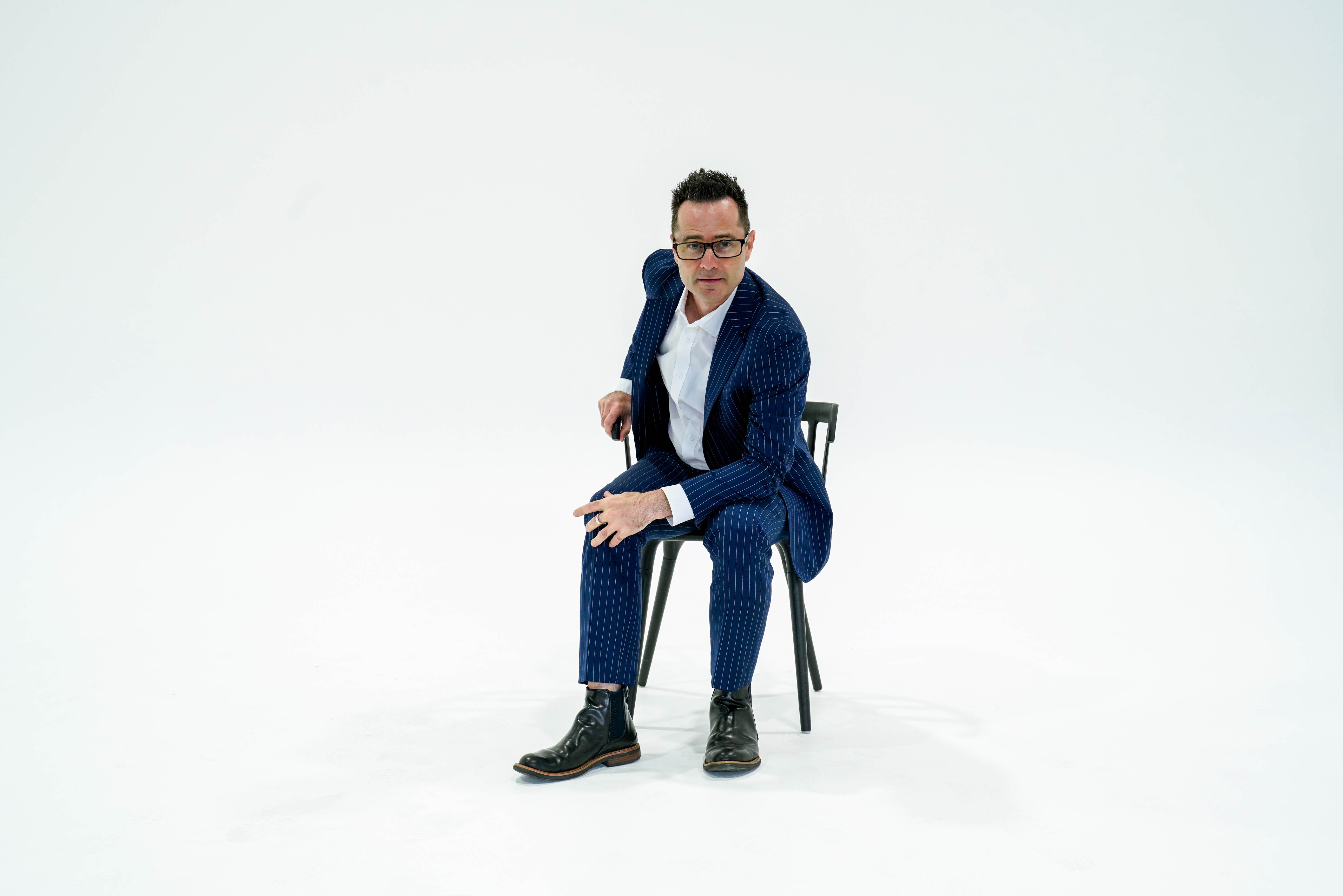
He grew up in Perth, on the far edge of Western Australia, about as far from a keynote stage as a person can get. He also failed English in his first year of high school. Then someone handed him a book about how the mind actually works, and something clicked that never really un-clicked. He went back, doubled down, and walked out the other side with a double major in Philosophy and English and a question he has been chasing ever since: how far can you see out, and how deep can you go in?
The years in between were not tidy. Sam has been a schoolteacher, a human beatboxer, a living statue, a wedding DJ, and yes, a guy who tiled kitchens. It sounds like a scattershot resume, but it was really the same job over and over: read the room, hold your nerve, and work out what is actually going on with the person in front of you. Turns out that is the whole game.
Underneath the odd jobs, he was always reading. A lot. Twenty-five years deep into Jung, the Demartini Method, and a stack of philosophy most people never crack the spine on. He has written six books along the way, one of them, fittingly, on beating imposter syndrome. None of it was a detour. It was all the same search, just taking the scenic route.
These days he is based in Los Angeles with Julie, his wife and best friend, who has both backed him and called him on his nonsense for going on ten years now. When he is not on a stage, you will find him on a yoga mat, in a Wing Chun class, or behind a set of decks at home with the volume up louder than the neighbors would like. Same guy, same curiosity, just fewer people watching.
A vision and a mission are only as real as what actually happens in the room. Here's what turns the idea into something you can use.
When you see only the downside or only the upside, your read on the situation warps and your composure goes with it. Get the view balanced and it comes back, and so does the room.
You don't get to claim depth, you have to show it. Sam goes down the stairs first, before he asks anyone to follow. Whatever the room is asked to do, they've watched him do it on stage first.
Clarity is the start, not the finish. What you're really after is people who own their reactions, run their own lives, and lead from what's actually theirs.
Strip away the odd jobs, the books, and the years of study, and it all comes back to one stubborn idea Sam keeps testing on stage: what you can see is the whole ballgame, and you can get better at seeing.
Perception is the competitive advantage.